Roof Warranty Disputes in Commercial Roofing: How Procedural Gaps Shift Liability to the Wrong Party

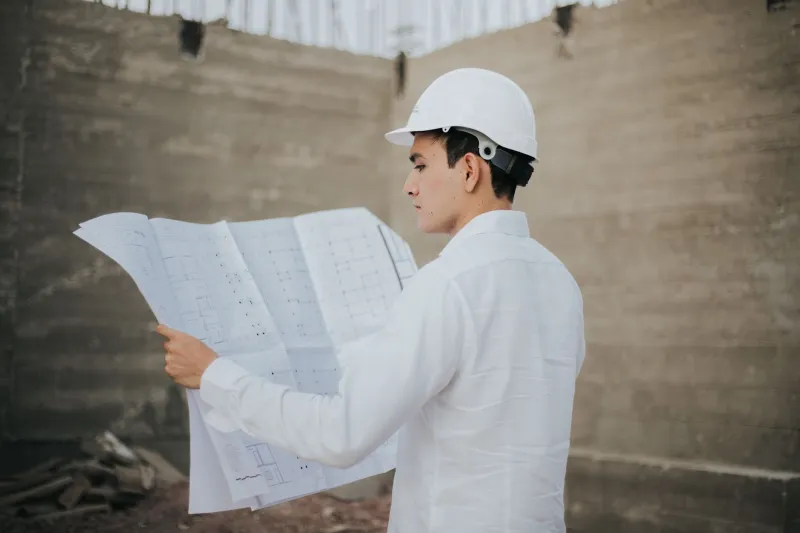
Photo by Photo by RONNAKORN TRIRAGANON on Unsplash on Unsplash
A commercial roofing warranty is a legal instrument, not a marketing document. The language in manufacturer warranty agreements is drafted by legal teams whose primary objective is to define the conditions under which the manufacturer's liability is limited or eliminated. Contractors and property managers who treat warranty certificates as straightforward guarantees of performance frequently discover, at the worst possible moment, that the coverage they believed they had was conditioned on procedural requirements they did not fulfill.
The friction points in commercial roofing warranty disputes are well-established among attorneys who specialize in construction defect litigation, but they are less well understood among the contractors and property managers who are most directly affected by the outcomes. This article maps those friction points and provides a practical framework for structuring contracts, documentation practices, and maintenance records that protect all parties and preserve the actual value of the warranty.
The Structural Divide: Workmanship Warranties vs. Manufacturer Warranties
Commercial roofing warranties operate in two parallel tracks that are frequently conflated by property owners and, in some cases, by contractors themselves.
The manufacturer's warranty covers material performance—membrane integrity, adhesive bond strength, seam durability—and is typically conditioned on installation by a manufacturer-approved contractor following the manufacturer's published specifications. The duration of manufacturer warranties on commercial single-ply systems commonly ranges from 10 to 30 years depending on the coverage tier purchased, with NDL (no-dollar-limit) warranties representing the highest level of manufacturer commitment.
The contractor's workmanship warranty covers the quality of the installation itself—the correctness of flashing details, the adequacy of drainage slope, the integrity of penetration seals—and is typically limited to two to five years in commercial contracts, though this varies by jurisdiction and negotiation.
The critical point is that these two warranties do not cover the same things, and a failure that falls into the gap between them can leave the property owner without recourse against either party. Water intrusion originating at a flashing detail that was installed correctly per manufacturer specifications but has deteriorated due to substrate movement, for example, may not qualify as a workmanship defect or a material failure—it may simply be an uncovered condition.
Where Manufacturer Warranties Break Down
Manufacturer warranty claims are denied or reduced for a predictable set of reasons, most of which are traceable to events that occurred at or before the time of installation.
Unauthorized material substitution is among the most common. Manufacturer warranties typically require that all components of the roofing assembly—membrane, insulation, adhesives, fasteners, and cover boards—be sourced from an approved product list. When a contractor substitutes a comparable product from a competing manufacturer to address a supply chain gap or reduce material cost, the substitution may not be disclosed on the installation documentation. If the substituted component is later identified as contributing to a failure, the manufacturer has grounds to void the warranty in its entirety.
Installation outside approved parameters is the second major category. Manufacturers publish detailed installation specifications covering minimum temperature thresholds for adhesive application, fastener spacing requirements for wind uplift compliance, and seam overlap minimums. Inspections conducted during warranty investigations frequently reveal that field conditions at the time of installation did not meet these parameters—a finding that is difficult to refute if the contractor's own installation records document the conditions accurately.
Failure to register the warranty is a procedural failure that is almost embarrassingly common given its consequences. Many manufacturer warranties require formal registration within a defined period following project completion, often 30 to 90 days. Contractors who complete the installation and move to the next project without initiating registration leave the property owner with a warranty certificate that has no legal standing with the manufacturer.
Unauthorized repairs or modifications made after installation are another frequent disqualifier. Property owners who engage a non-approved contractor for emergency repairs, or who allow HVAC technicians to penetrate the membrane without following the manufacturer's approved repair protocol, may inadvertently void coverage for the entire roof system—not merely the area affected by the unauthorized work.
The Documentation Standard That Determines Outcomes
In warranty disputes that proceed to formal resolution—whether through manufacturer claims processes, mediation, or litigation—documentation quality is the primary determinant of outcome. Contractors who maintain comprehensive installation records are in a fundamentally stronger position than those who rely on memory, oral accounts, or incomplete paperwork.
A defensible installation documentation package should include, at minimum:
- Pre-installation substrate assessment, including moisture readings and deck condition photographs, establishing the condition of the substrate at the time of installation and documenting any conditions that were accepted by the property owner as-is.
- Daily installation logs recording ambient temperature, dew point, wind conditions, and crew composition for each day of installation activity.
- Material delivery records confirming that all components were sourced from manufacturer-approved product lines, with batch numbers and delivery dates cross-referenced to the installation log.
- Inspection photographs at each phase of installation—insulation placement, membrane application, seam welding or adhesive application, and flashing completion—providing visual evidence that each assembly stage was completed per specification.
- Warranty registration confirmation, retained in the project file with the registration date and confirmation number.
This documentation should be retained for the full term of the warranty plus the applicable statute of limitations in the project's jurisdiction—in many states, that means retaining records for 15 years or longer.
Structuring Contracts That Protect Both Parties
The contract between the property owner and the roofing contractor is the document that allocates risk between those two parties. Contracts that are silent on warranty obligations, documentation requirements, or maintenance responsibilities create ambiguity that, in a dispute, tends to be resolved against whichever party has the weaker negotiating position or the less experienced legal counsel.
Contracts should explicitly address the following:
Warranty registration responsibility. The contract should designate which party is responsible for registering the manufacturer warranty, establish the timeline for registration, and require written confirmation of registration to be delivered to the property owner within a defined period.
Approved repair protocol. The contract should specify that any post-installation repairs to the roof system must be performed by a manufacturer-approved contractor and must follow the manufacturer's published repair specifications. This provision protects the contractor's warranty standing against unauthorized modifications made by the property owner.
Maintenance obligations. Many manufacturer warranties include a maintenance requirement—typically annual or biannual inspection by a qualified roofing contractor. The contract should clarify whether the installing contractor is obligated to perform this maintenance, and if so, at what cost structure. If maintenance is the property owner's responsibility, the contract should document that obligation explicitly.
Defect notification timelines. The contract should establish the timeline within which the property owner must notify the contractor of a suspected defect, and the contractor must notify the manufacturer of a potential warranty claim. Missing these notification windows can extinguish rights that would otherwise be available.
The Contractor's Role in Preserving Client Coverage
The most significant shift in perspective that commercial roofing contractors can make regarding warranty management is to treat warranty preservation as a service they actively provide to their clients, rather than a passive benefit that flows automatically from the installation.
This means proactively notifying clients when warranty registration deadlines are approaching, maintaining a calendar of maintenance inspection requirements tied to each project's warranty terms, and establishing a clear protocol for responding to client reports of potential defects before those reports age into missed notification windows.
Contractors who adopt this posture differentiate themselves in a market where warranty disputes are common and client trust is difficult to rebuild after a coverage failure. More practically, they protect themselves from the secondary liability that arises when a property owner's warranty claim is denied and the property owner's next conversation is with an attorney reviewing the original installation contract.
The warranty is only as valuable as the procedures that surround it. For commercial roofing professionals, building those procedures into standard operating practice is not administrative overhead—it is the foundation of a durable client relationship and a defensible business record.